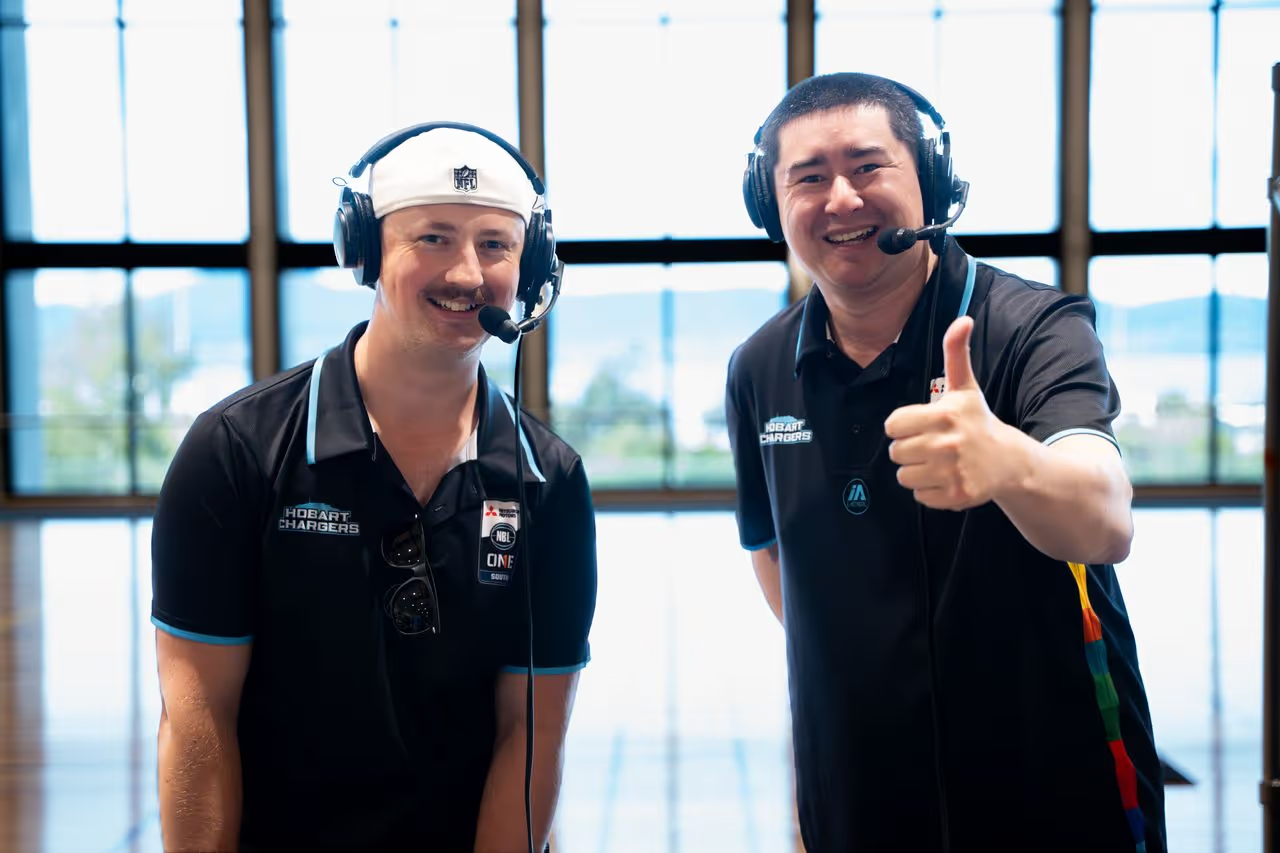
Ronnel Riggs didn't grow up chasing a career in basketball. He just found himself around it. Growing up in Queenstown, there weren't endless options when it came to sport. It was simple. Footy, basketball, or golf. That was it. And for him, basketball became the natural fit; not because of some long-term vision, but because of the environment around him, and the influence of someone close to him. His mum. He lost his dad at a young age, so for most of his upbringing it was just the two of them. They leaned on each other. Looked after each other. And through that, basketball became something more than just a sport; it became something that filled time, created structure, and gave him a sense of direction. His mum supported everything he did within the game. Coaching, playing, umpiring. Whatever it was, she was there supporting him. And when he reflects now, that support is still at the centre of everything.
From a young age, there was something that kept pulling him back to the sport. It wasn't just about playing. It was about being involved.
He started in under 10s. Like most kids, just enjoying it for what it was. But even then, there was a sense that this would stick. As he got older, instead of stepping away from the sport, he found more ways to be part of it. He helped run junior competitions. He coached younger teams. He joined committees. There was a natural shift from participant to contributor. And it never really stopped.
That transition became more obvious when he moved from Queenstown to Hobart. For a lot of people, moving away from a small town would mean starting fresh. For Ronnel, it meant finding a way to stay connected.
The first thing he did was look for a club. That search led him to Hobart Phoenix, and from there everything started to build. Coaching expanded. Umpiring opened up new opportunities. Slowly, piece by piece, he started to find where he fit in the game. And that's something that stands out when you look at his journey as a whole. There wasn't one clear path. There were multiple.
Umpiring became one of the first major steps. It wasn't just local competitions. It grew into something much bigger. National Junior Championships. State-level competitions. Eventually refereeing in the SEABL; the level just below the NBL at the time. He spent five years officiating at that level, experiencing the game from a completely different perspective. And through that, basketball started to take him places he never expected.
He tells it simply. For a kid from Queenstown, none of this was planned.
One moment that captures this best is refereeing Matthew Dellavedova as a junior. At the time, it was just another game. Looking back, it became something bigger. Seeing someone go on to win an NBA championship and knowing you were part of their journey at some point, gives perspective on how connected the game really is.
Eventually, injuries forced him to step away from officiating. And like any turning point in sport, there was a decision to make. Step away completely. Or find a new role.
He stayed.
That decision led to something that now defines a large part of his contribution; media. At the time, it wasn't a structured pathway. There was no roadmap to follow. It started with small things: helping with video, putting together highlights, and interviewing players. He worked alongside people running local productions, slowly learning what went into covering the game from the outside. And bit by bit, that turned into something much bigger.
What is now known as Chargers TV didn't exist before he built it. It grew from nothing. Just a willingness to give something back.
That's a consistent theme across his entire journey. He doesn't talk about roles. He talks about helping.
Even when asked how he'd describe himself in basketball, he doesn't go to titles. He says he's just someone who wants to contribute. Someone who wants to give back. Someone who wants to help the sport keep growing.
That mindset explains a lot about how he operates. Because along the way, there have been moments most people would hold onto. Becoming a life member of the Chargers. Years of contribution across multiple areas of the game. Recognition within the community. But he doesn't lean on those things. He still sees himself as someone in the middle of the work.
That perspective is what allows him to keep going. Because for him, basketball isn't something separate from life. It is life.
He describes it as "everything". Something that takes up most days. Something that's always there in the background. And something he still finds hard to step away from, even when he knows he needs to. That's where his journey becomes more relatable. Because passion can carry you a long way. But it can also take a toll.
There have been times where it caught up with him. Moments of burnout. Moments where the load became too much. Moments where everything built up and the only response was exhaustion.
That's when he started learning something different. Not how to do more. But how to step back.
For a long time, his default answer to everything was yes. Can you help here? Yes. Can you coach this team? Yes. Can you be involved in this? Yes. That works; until it doesn't. Over time, he realised that constantly saying yes wasn't sustainable. The rest wasn't something you earn. It's something you need.
Learning to say no became one of the biggest adjustments in his life. And one of the most important.
Now, he finds ways to switch off. Going for walks around Hobart. Putting his phone away. Finding small moments away from the game. Not because he wants to step away from basketball permanently, but because those breaks allow him to keep coming back.
That balance is what's allowed him to stay in the game for as long as he has.
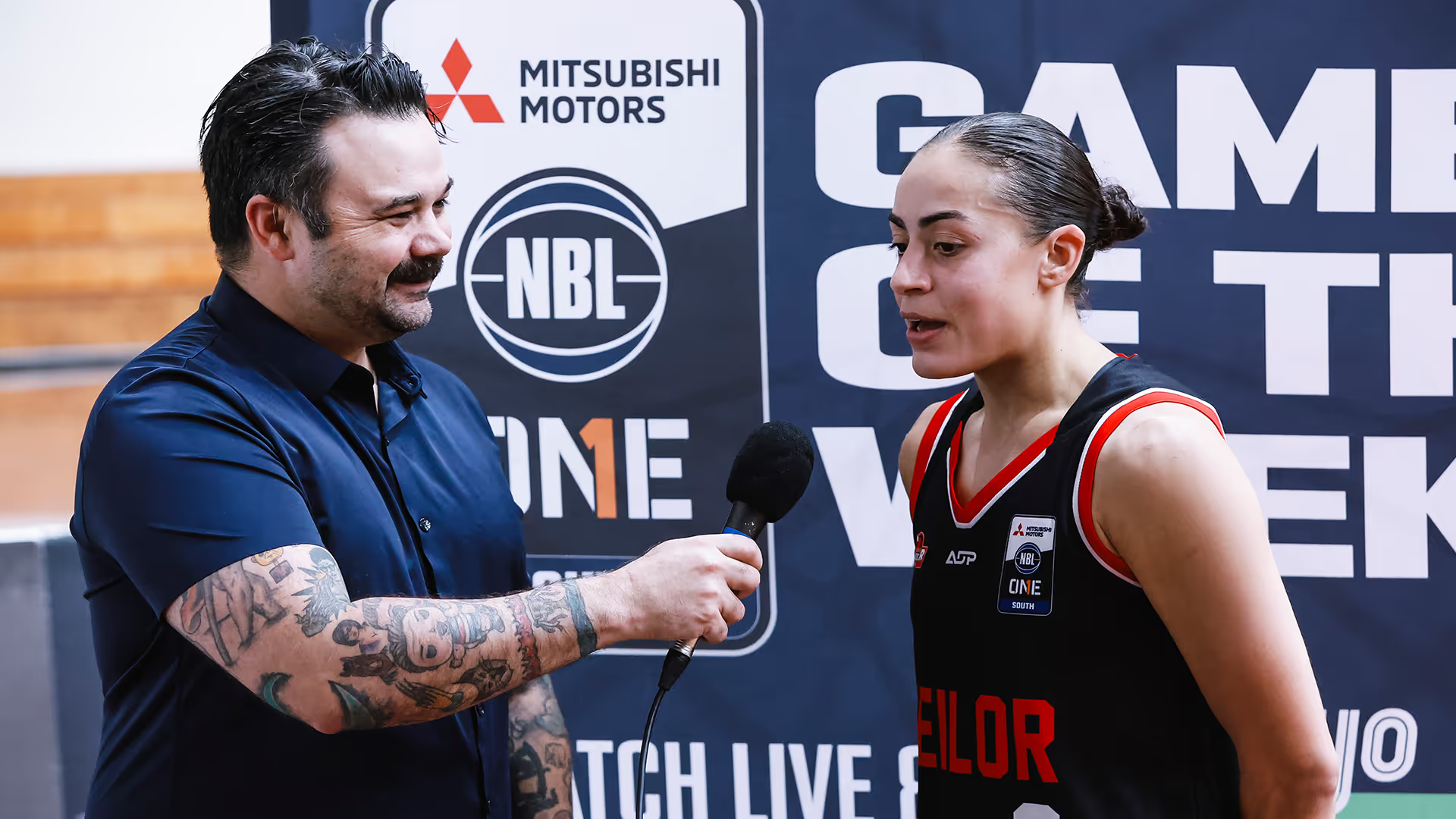
Today, much of his role sits behind the microphone. But it's not just about calling games. It's about telling stories.
That part of his work carries a different type of responsibility. When you're speaking about players, you're representing their journey. Trying to understand how they got there. Where they've come from. What they've experienced. And then finding a way to communicate that to others.
He takes pride in that. Because in a place like Tasmania, those stories matter. The community is close. The connections are real. And the impact of sharing someone's story goes beyond the game itself.
That closeness creates something unique. A sense of community that you don't always see at higher levels. Where players, coaches, officials, and media are all connected in different ways.
For Ronnel, basketball is a family.
Not in a superficial sense. But in the day-to-day interactions. The people you see regularly. The relationships you build. The support that exists within the sport.
He sees it in the players he coaches. He sees it in the people he works with. He sees it in the wider Tasmanian basketball community.
And that community is evolving.
More players are moving into college pathways. State teams are becoming more competitive. Tasmania is being recognised more in basketball circles.
There's growth happening. And people like Ronnel have played a role in building that.
But he's also realistic about what the sport needs. It needs more people. More volunteers. More officials. More people willing to contribute.
Because without that, it doesn't run.
That's why he continues to do what he does. Even after years in the system. Even after everything he's already given.
When he reflects on what he wants his contribution to represent, it's simple. He wants people to know he gave everything.
Not in one role. But across all of them.
Because his journey isn't defined by a single position. It's defined by staying involved.
Ronnel Riggs' story is different to the typical pathway through sport. It's not about becoming the best player. Or reaching the highest level.
It's about finding your place in the game. And then continuing to show up in it.
Through coaching. Through officiating. Through media. Through simply being present.
His journey shows that impact doesn't always come from where you start. It comes from how long you stay, and how much you're willing to give.
Because in the end, sport isn't just built by the people on the court. It's built by the people who stay connected to it, year after year. And find ways to keep contributing.
And that's exactly what Ronnel Riggs has done.






.avif)

.avif)