
Luke Rosendale didn't fall in love with basketball in front of a crowd. It started at home, in the driveway.
After school, he would head outside and spend hours there. No structure. No system. Just a hoop, a ball, and whatever imagination he could create. He spoke about lowering the rim so he could dunk, raising it back up, hitting game-winners, and if he missed the first one, there was always somehow five seconds added back onto the clock for another shot.
It was simple. But for him, it was everything. Because in those moments, nothing else mattered. School, friends, anything going on in life; it all disappeared. Basketball became a space where he could just focus, be creative, and enjoy something that felt completely his. That was the beginning.
Growing up in Echuca, basketball wasn't about contracts or careers. It was about experience. Weekends were spent travelling to tournaments with mates. Playing games, staying at caravan parks, finding somewhere to eat in between, and doing it all again the next day. It wasn't structured like professional pathways. It was social, competitive, and fun all at once. But even then, there was something else underneath it. A competitive edge.
He traces that back to his older brother. Everything became a challenge; not because he was winning, but because he wanted to. He spoke about constantly trying to beat him, chasing game after game, knowing full well he'd probably lose again. And most of the time, he did. But that didn't stop him. If anything, it drove him. That repeated cycle of losing, wanting to try again, and believing the next game would be different says a lot about how his mindset developed early.
That mindset was tested properly when he left home. Moving from Echuca to Melbourne was the first major step in his journey, and it wasn't an easy one. He left behind everything familiar: friends, family, routine. He arrived in a new environment where he didn't really know anyone and wasn't sure how he would fit. For the first couple of months, it didn't feel right. He questioned whether he should go back. And that's where something shifted.
He stayed. Not because it suddenly became easy, but because he worked through it. That period became one of the most important learning moments of his journey. He spoke about how it taught him resilience; the idea that just because things don't feel right straight away doesn't mean you walk away. That lesson stays with him now.
When Luke talks about his pathway, one thing stands out clearly; it hasn't been straightforward. He wasn't always the standout player. He wasn't the one guaranteed selection, or the main guy in teams growing up. He described himself as being on the fringe; close, but not quite there. And that space is where a lot of players drop off. Because it's easy to continue when things are going well. It's harder to keep going when things are uncertain, when you're not quite where you want to be yet.
What carried him through wasn't certainty. It was enjoyment.
He didn't play because he knew where it would lead. He played because he loved it. And over time, that consistency started to build something. Interestingly, the moment he realised basketball could become a career came much later than most would expect. He spoke about being a training player around 2022 or 2023 and starting to have moments in training where he thought, "this isn't impossible." Not guaranteed. Not certain. But possible.
That distinction matters. Because instead of putting pressure on himself early to make basketball a career, he let the process unfold. His focus stayed on improving, enjoying the game, and seeing where it might go. And now, having reached that level, he still carries that same perspective. He's a professional athlete, but he still enjoys it.
When he talks about the difference between NBL1 and the NBL, it's clear how much the environment shifts. The crowds, the expectations, the scale; everything is bigger. In NBL1, you might be playing in front of a few hundred people. In the NBL, you're in front of thousands, with everything magnified. The travel increases. The training load increases. The season becomes longer and more demanding. And perhaps most significantly, the people around you change. You're suddenly interacting with players who have experienced the very top level of the sport; players who have played in the NBA, won championships, and seen what elite performance looks like at its highest level. That exposure changes your understanding of what is required.
But alongside that comes one of the toughest parts of the journey; the role of a development player. It's a position where opportunity isn't guaranteed. You may not play. You may not get meaningful minutes. And a lot of your work happens outside of the spotlight. Luke's perspective on this was refreshingly simple. He sees it as his job to be ready.
Even when the team travels and he stays back. Even when the minutes aren't there. Even when the opportunity isn't visible. He continues to prepare. Because the reality is, you don't know when that moment is coming, or who might be watching when it does. And if it comes, you have to be ready.
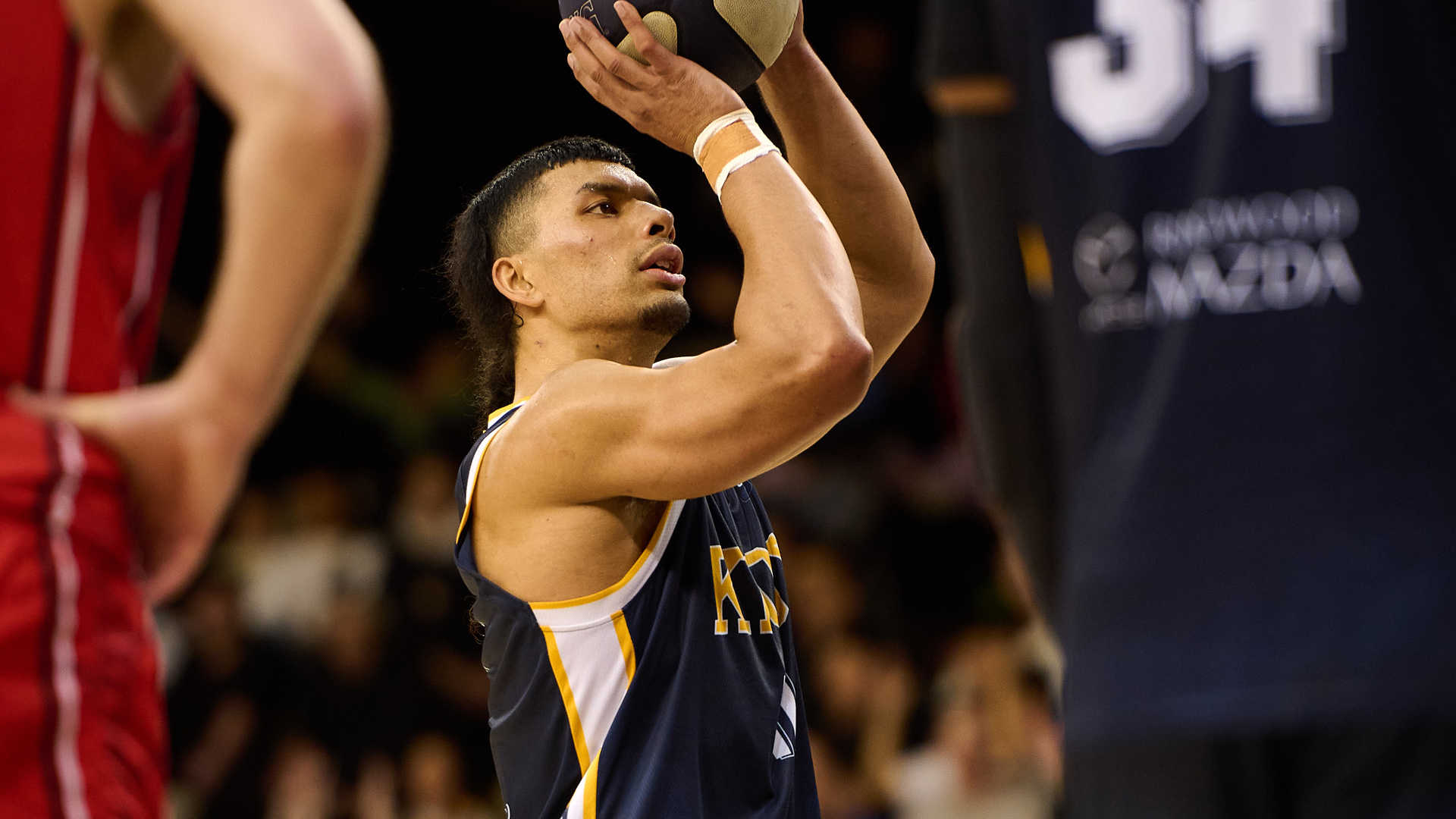
That readiness is built through repetition. For him, confidence isn't something that just appears. It's built through daily habits. Through getting shots up, doing the extra work, and showing up consistently. He described this as stacking days. How many days can you put together where you've done everything you can? Not perfect days. Just intentional ones. Because over time, those days add up.
That idea carries beyond basketball. On difficult days, a "good day" might simply mean showing up, doing something positive, or helping someone else. The definition changes, but the principle stays the same. Keep stacking.
There's also an honesty in how he talks about confidence. He admits it's something he's had to work on, something he's struggled with at times, especially being hard on himself. But that self-awareness is what allows growth. Because he knows what standard he wants to reach; becoming a consistent rotation player in the NBL, and he understands what it will take to get there.
That mindset comes through strongly in how he approaches games. He doesn't try to eliminate nerves. He embraces them. For him, that feeling before the game; the uncertainty of what might happen, is part of why he plays. His focus is clear: Win. And back himself.
That approach has translated into his time with the Hobart Chargers. Joining the group just days before the season started, he walked into an already established culture. Instead of forcing anything, he fell into it. And what stood out straight away was the connection. Within a few days, he felt part of the group. The relationships were genuine. The energy was positive. And importantly, players understood their roles. That understanding has been key in tight games.
He spoke about how players like Harry Griffiths embrace their role fully; not needing to score to feel valuable, but contributing in other ways. That clarity allows the team to function. Because in close games, confusion leads to mistakes. Clarity builds confidence.
Luke also highlighted the role of coach Jarrod Weeks in creating that environment. Someone who understands the game deeply, supports his players, and holds them accountable in a consistent way; whether the performance is strong or not. That consistency builds trust. And trust shows up in pressure moments.
Off the court, Luke sees his role as bringing energy. Enjoying the game. Keeping things light when they need to be. Reminding people not to lose sight of why they started. Because seasons move quickly. Faster than expected. And if you don't take moments to appreciate them, they pass you by.
He reflected on that recently. After a season where he wasn't initially signed, he considered different pathways. Whether to continue pushing or adjust direction. Then the opportunity came. He was signed mid-season. Played meaningful minutes. Experienced games in high-pressure environments. And for a brief moment, he was able to step back and recognise it. It was a good season.
Then, just as quickly, it moved on. Back into the next one.
That's the reality he's learning to navigate; balancing the drive to improve with the ability to appreciate where he is.
At this point in his career, his focus isn't limited to a single outcome. It's about playing the best basketball he can. Wherever that is. Whether that's in the NBL, overseas, or somewhere he hasn't even considered yet. Because he understands how short this window is. And he wants to make the most of it.
When asked what he hopes people see when they watch him play, his answer is simple. Someone who works hard. And someone who loves the game.
Because at the end of it all, that's still what drives him. The same thing that started in the driveway.
Luke Rosendale's journey isn't defined by early success or a perfect pathway. It's built on staying with it. Working through uncertainty. Continuing when things don't go to plan. And preparing for opportunities that may or may not come.
It's about stacking days.
And trusting that if you do that for long enough, something will come from it. Even if you don't know what that is yet.
And right now, he's still right in the middle of that process.







.avif)

.avif)